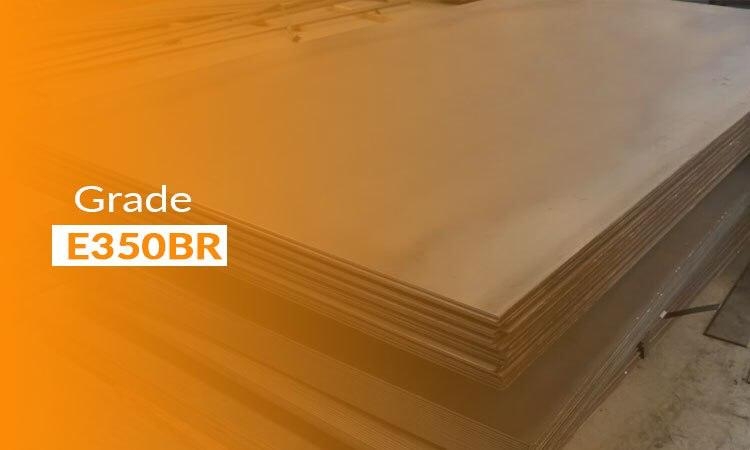
Grade E350BR
Chemical Properties of Grade E350BR
Grade E350BR is a structural steel grade commonly used in various applications, including construction, bridges, and buildings. It is known for its excellent strength, weldability, and durability. Understanding its chemical composition is essential for determining its suitability for specific applications.
Chemical Composition of Grade E350BR
The chemical composition of Grade E350BR is designed to provide a balance of strength and toughness, making it an ideal choice for structural applications. The key elements and their typical percentage ranges are outlined in the table below:
Key Characteristics
- Strength and Durability: The presence of carbon and manganese ensures high tensile strength and durability, making Grade E350BR suitable for heavy-duty structural applications.
- Weldability: Silicon and other alloying elements contribute to good weldability, allowing for ease of fabrication and joining processes.
- Corrosion Resistance: Elements like copper, chromium, and nickel enhance the steel's resistance to corrosion, extending the lifespan of structures made from E350BR.
- Toughness: The controlled levels of sulfur and phosphorus help maintain the toughness and ductility of the steel, even at lower temperatures.
Applications of Grade E350BR Steel
Grade E350BR is a high-strength structural steel that is widely used in a variety of applications due to its excellent mechanical properties, durability, and versatility. Here are some key applications of Grade E350BR steel:
1. Construction Industry
- Buildings and Skyscrapers: Grade E350BR steel is commonly used in the construction of high-rise buildings and skyscrapers. Its high tensile strength and toughness make it ideal for structural frameworks, providing the necessary support to withstand heavy loads and environmental stresses.
- Bridges: The strength and durability of E350BR make it a preferred material for constructing bridges. It can endure significant loads and resist corrosion, ensuring the longevity and safety of bridge structures.
- Industrial Buildings: E350BR is also used in the construction of industrial buildings such as factories, warehouses, and workshops. Its ability to bear heavy loads and resist wear and tear makes it suitable for these demanding environments.
2. Infrastructure Projects
- Railway Tracks: Grade E350BR steel is utilized in the construction of railway tracks and related infrastructure. Its robustness and wear resistance are critical for the safety and reliability of railway systems.
- Highway Overpasses and Tunnels: The material is also used in building highway overpasses and tunnels, where it provides the necessary strength to support large volumes of traffic and withstand environmental conditions.
3. Heavy Machinery and Equipment
- Cranes and Hoisting Equipment: The high strength-to-weight ratio of E350BR steel makes it ideal for manufacturing cranes and hoisting equipment. These machines require materials that can support heavy loads without compromising on durability and safety.
- Mining and Earthmoving Equipment: In the mining industry, Grade E350BR is used to manufacture equipment such as excavators, loaders, and dump trucks. Its toughness and resistance to wear are essential for the harsh conditions of mining operations.
4.Shipbuilding and Offshore Structures
- Ships and Vessels: The maritime industry uses Grade E350BR steel in the construction of ships and vessels. Its high strength and corrosion resistance are vital for structures exposed to marine environments.
- Offshore Platforms: E350BR is also used in building offshore oil and gas platforms. These structures require materials that can withstand harsh oceanic conditions, including strong currents, saltwater corrosion, and heavy loads.
5.Automotive and Transportation
- Vehicle Frames and Chassis: In the automotive industry, Grade E350BR steel is used for manufacturing vehicle frames and chassis. Its strength and durability contribute to the safety and performance of vehicles.
- Railway Rolling Stock: The material is used in the construction of railway rolling stock, including carriages and freight wagons. Its robustness ensures the safety and efficiency of rail transport.
Mechanical properties of E350 BR
E350 BR is a grade of steel that is commonly used in structural and general engineering applications. The "E" denotes a structural steel grade, and "350" indicates the minimum yield strength in megapascals (MPa). The "BR" stands for "Boron," which is an element added to enhance the hardenability of the steel. Here are the typical mechanical properties of E350 BR steel:
Mechanical Properties of E350 BR Steel
- Yield Strength:
- Minimum: 350 MPa
- Tensile Strength:
- Typically ranges from 490 to 630 MPa
- Elongation:
- Minimum: 20% (for a gauge length of 5.65√A, where A is the cross-sectional area)
- Impact Strength (Charpy V-notch test):
- Generally conducted at room temperature and specified in terms of energy absorbed, e.g., 27 Joules at 0°C, but specific values can vary depending on the standards and requirements.
Applications
E350 BR steel is used in variongus applications, includi:
- Structural components for buildings and bridges
- Engineering machinery
- Railway wagons and coaches
- General fabrication and manufacturing
The addition of boron improves the steel's hardenability, making it suitable for applications that require high strength and toughness.
Conclusion
Grade E350BR steel's excellent mechanical properties, combined with its versatility, make it a preferred choice for a wide range of applications. From high-rise buildings and bridges to heavy machinery and offshore platforms, E350BR provides the necessary strength, durability, and resistance to environmental stresses required for these demanding applications. By choosing Grade E350BR, engineers and builders can ensure the safety, longevity, and reliability of their projects.
.jpeg&w=256&q=75)

.jpeg&w=256&q=75)
.jpeg&w=256&q=75)
.jpeg&w=256&q=75)
.jpeg&w=256&q=75)

.jpeg&w=256&q=75)

.jpeg&w=256&q=75)
.jpeg&w=256&q=75)


.JPG&w=256&q=75)