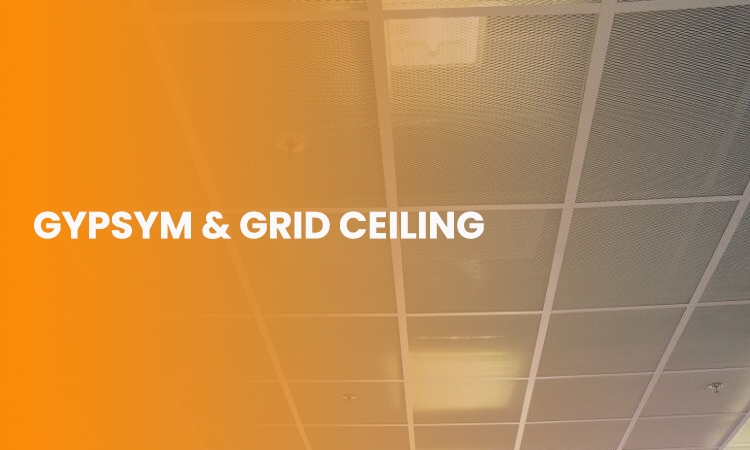
GYPSYM & GRID CEILING
Gypsum & Grid Ceiling: Specifications and Details
Introduction
Gypsum and grid ceiling systems are popular for their versatility, ease of installation, and aesthetic appeal. These systems are widely used in commercial, residential, and industrial settings to create functional and visually pleasing ceiling spaces. GypCeiling grid systems, in particular, are compatible with a wide range of plain or perforated patterned ceiling tiles and provide easy access to the ceiling cavity. This document explores the specifications, benefits, and applications of gypsum and grid ceiling systems, focusing on their compatibility with various ceiling tiles and the advantages they offer.
Specifications
1. Material Composition
- Gypsum Tiles: Made from high-quality gypsum plaster, reinforced with fiberglass or other additives to enhance strength and durability.
- Grid System: Typically made from galvanized steel or aluminum, providing a robust framework to support the ceiling tiles.
2. Tile Types
- Plain Tiles: Smooth, unpatterned tiles that offer a clean, minimalist look.
- Perforated Tiles: Feature various patterns of perforations, enhancing acoustic performance by absorbing sound.
- Patterned Tiles: Decorative designs that add aesthetic appeal to the ceiling.
3. Tile Dimensions
- Standard Sizes: Commonly available in 600mm x 600mm (2ft x 2ft) and 600mm x 1200mm (2ft x 4ft) sizes.
- Custom Sizes: Can be tailored to meet specific design requirements.
4. Edge Types
- Square-Edge: Flush fit with the grid system, creating a seamless look.
- Tegular-Edge: The tiles sit slightly below the grid, adding depth and dimension to the ceiling.
5. Grid System Components
- Main Runners: Primary support beams running the length of the ceiling.
- Cross Tees: Secondary supports that connect to the main runners, creating a grid pattern.
- Wall Angles: Perimeter trims that provide a finished edge where the ceiling meets the wall.
- Suspension Wires: Used to hang the grid system from the structural ceiling above.
Benefits
1. Ease of Installation
- Quick Assembly: The grid system allows for rapid installation of ceiling tiles, reducing labor costs and construction time.
- Accessibility: Easy access to the ceiling cavity for maintenance and repairs, such as HVAC systems, electrical wiring, and plumbing.
2. Versatility
- Compatibility: Works with a wide range of ceiling tiles, including plain, perforated, square-edge, and tegular-edge tiles.
- Customizable: Can be tailored to fit various room dimensions and design requirements.
3. Aesthetic Appeal
- Design Flexibility: Offers numerous design options with different tile patterns, colors, and finishes.
- Professional Look: Provides a clean, finished appearance suitable for commercial and residential spaces.
4. Acoustic Performance
- Sound Absorption: Perforated tiles with acoustic backing materials improve sound absorption, creating a quieter environment.
- Noise Reduction: Helps to reduce noise levels in busy areas, enhancing overall comfort.
5. Durability
- Long-Lasting: High-quality materials ensure the ceiling system remains durable and maintains its appearance over time.
- Moisture Resistance: Certain gypsum tiles are treated to resist moisture, making them suitable for areas with high humidity.
6. Fire Resistance
- Safety: Many gypsum ceiling tiles offer fire-resistant properties, providing an added layer of safety in buildings.
Applications
1. Commercial Spaces
- Offices: Provides a professional and clean look while offering easy access to utilities for maintenance.
- Retail Stores: Enhances the shopping environment with attractive ceiling designs.
- Hospitals: Offers hygienic, easy-to-clean ceiling solutions that meet health and safety standards.
2. Residential Spaces
- Living Rooms: Adds aesthetic appeal with customizable designs and patterns.
- Kitchens: Moisture-resistant tiles are ideal for kitchen environments.
- Basements: Provides a finished look while allowing access to plumbing and electrical systems.
3. Educational Institutions
- Classrooms: Acoustic tiles improve sound quality, creating a better learning environment.
- Libraries: Helps to create a quiet and conducive atmosphere for studying.
4. Industrial Settings
- Warehouses: Durable and easy-to-maintain ceilings suitable for large spaces.
- Production Areas: Provides easy access to utilities and ventilation systems.
Installation Process
1. Preparation
- Measurement: Measure the area to determine the number of tiles and grid components needed.
- Marking: Mark the layout on the structural ceiling to guide the installation.
2. Grid System Assembly
- Install Wall Angles: Attach wall angles around the perimeter of the room.
- Hang Main Runners: Suspend the main runners from the structural ceiling using suspension wires.
- Insert Cross Tees: Connect cross tees to the main runners, forming a grid pattern.
3. Tile Installation
- Cutting: Cut tiles to fit around obstacles and along the edges of the room.
- Placement: Place tiles into the grid system, ensuring they sit flush or slightly recessed, depending on the edge type.
Conclusion
In summary, gypsum and grid ceiling systems offer a versatile, durable, and aesthetically pleasing solution for various architectural applications. With compatibility across a wide range of ceiling tiles, including plain, perforated, and patterned designs, these systems provide design flexibility, easy installation, and access to ceiling cavities for maintenance. Their benefits, including acoustic performance, fire resistance, and moisture resistance, make them suitable for commercial, residential, and industrial spaces, enhancing the overall functionality and appearance of any room.
.jpeg&w=256&q=75)

.jpeg&w=256&q=75)
.jpeg&w=256&q=75)

.jpeg&w=256&q=75)
.jpeg&w=256&q=75)

.jpeg&w=256&q=75)

.jpeg&w=256&q=75)
.jpeg&w=256&q=75)



.JPG&w=256&q=75)