Rio Tinto’s New CEO Simplifies Structure, Names Iron Ore Chief
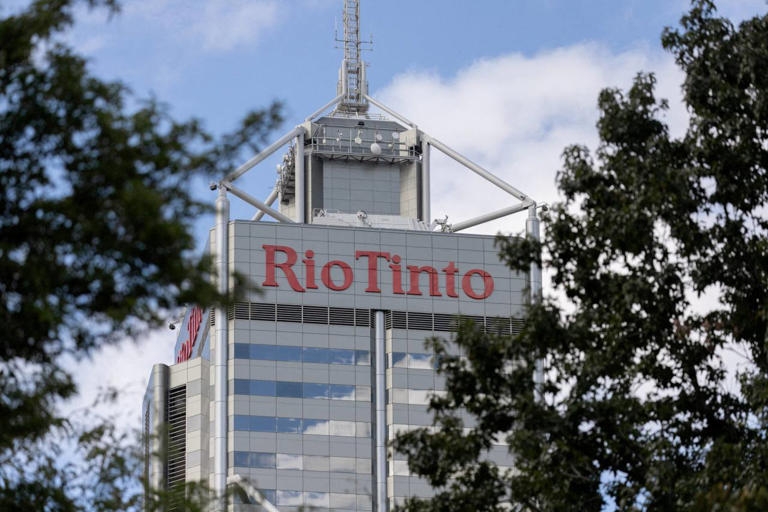
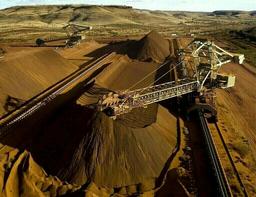
Rio Tinto’s new chief executive, Simon Trott, is simplifying the company’s structure and shrinking the giant miner’s leadership ranks, while elevating the head of its Pilbara mines to run the company’s lucrative iron-ore mining operations globally.
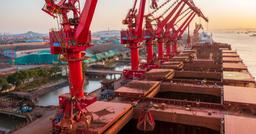
The Anglo-Australian miner said Wednesday that it will now run its operations under three units—iron ore, aluminum and lithium, and copper. Matthew Holcz will become iron ore chief executive, taking over from Trott with an expanded role that will include Rio Tinto’s iron ore operations in Australia, Canada and Guinea.
Jérôme Pécresse, head of Rio Tinto’s aluminum operations, will now also oversee the lithium business, while Katie Jackson will continue to lead its growing copper arm. Sinead Kaufman, Rio Tinto’s minerals chief, and Kellie Parker, its Australia chief, will both leave the company, the miner said.
Rio Tinto is reconsidering whether it keeps its borates operations in California, and an iron and titanium business in northern Quebec. Those businesses will be overseen by Chief Commercial Officer Bold Baatar while they are reviewed.
“By simplifying our work, we will move faster, minimize distraction, create clearer accountabilities, remove frustration and free people to focus on delivering excellence for our customers and working safely to generate real long-term value for Rio and our shareholders,” Trott said in a memo to employees seen by The Wall Street Journal.
Trott said in the memo that Rio Tinto will share the outcome of the strategic reviews “as soon as we can.”
Trott on Monday took the reins of the world’s second-biggest mining company from former CEO Jakob Stausholm, pledging to create more value for shareholders and communities from its growing business.
He said combining the company’s iron-ore operations under Holcz will help its teams share safety best practices, technologies and operational experience. Holcz, who currently oversees 18 mines, “is just the kind of leader we need to drive both performance and safety standards in our largest global business,” Trott said in the memo to staff.
Trott is currently in Guinea, where Rio Tinto stopped work on its huge Simandou iron-ore project following the death of a worker there on Friday. He said an investigation is ongoing, without providing more details on the fatal incident.
In the memo, Trott spoke of plans to further simplify the way Rio Tinto works. “Our current processes are too complex and slow us down,” he said.
The new executive team will meet for annual strategy sessions in September, during which they will set priorities for the coming year, he said. Trott said he will share more on the plans in the coming months.
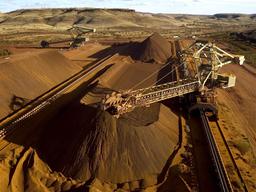
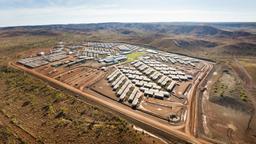
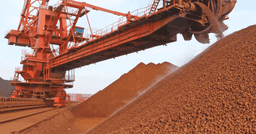
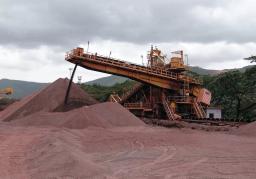
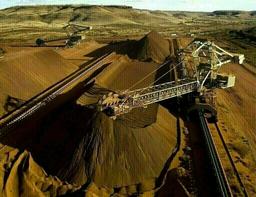
Trott’s appointment was welcomed by investors after he spent the past four years at the helm of Rio Tinto’s mammoth iron-ore operations in remote northwest Australia, which account for more than half the company’s earnings.
Still, he has taken on the job as Rio Tinto diversifies its business away from steel ingredient iron ore, underpinned by investments in copper and lithium.
Like many of its rivals, Rio Tinto has sought to cement itself as a major supplier of copper, an industrial metal viewed as arguably the most important to the energy transition because of its role as an electricity conductor.
Stausholm, Rio Tinto’s former CEO, had set a target for annual copper production of 1 million metric tons by the end of this decade, roughly 40% more than the company produced last year.
Earlier this year, the miner also acquired Arcadium Lithium for $6.7 billion, catapulting it into the ranks of the world’s top lithium producers.
Those businesses dwarf the borates and titanium operations Rio Tinto is reviewing.
Borates are needed for fertilizers, glass manufacturing and wood protection, amongst other uses. Rio Tinto’s California mine, home to one of the richest deposits of borates in the world, accounts for roughly 30% of global demand, according to the company’s website.
Originally published on MSN News
![Metals Rise Across the Board, with SHFE Nickel Up Nearly 2%; Stainless Steel, SHFE Lead, and SHFE Aluminum Lead Gains; Iron Ore Up Over 2% [SMM Midday Review]](/_next/image?url=https%3A%2F%2Fapi.infrakeys.com%2Fpublic%2Fimages%2F1747029799473_news_36.webp&w=256&q=75)




.webp&w=256&q=75)
.jpg&w=256&q=75)



.webp&w=256&q=75)